
How to Clean a Philadelphia Rowhome: Stairs, Trinities, and Tight Kitchens
· By Cris & Cleber Santos
The rowhome is the signature Philadelphia house. From the brick blocks of South Philly and Fishtown to the porch-front rows of Mayfair and Oxford Circle, a huge share of the city lives in homes that share walls with the neighbors, stack their rooms vertically, and squeeze a lot of life into a narrow footprint. They are efficient, sturdy, and full of character, and they also clean very differently than a sprawling suburban single-family house.
A rowhome has fewer square feet per floor but more stairs, more transitions, and more places for dust to settle in corners you cannot easily reach. Kitchens are often compact, basements are often damp, and the front door opens almost straight onto the sidewalk, which means street grit walks right in. This guide breaks down how to clean each part of a typical Philadelphia rowhome so it stays comfortable without turning into an all-weekend project.
Why rowhomes need their own cleaning approach
Most cleaning checklists assume a layout that spreads out horizontally. A rowhome goes up instead. You might have a living room and kitchen on the first floor, two bedrooms and a bathroom on the second, and in some blocks a third floor or a finished basement on top of that. Every trip between floors costs time, so the smartest way to clean is to work one floor at a time, top to bottom, carrying a small caddy of supplies with you instead of running up and down for each item.
Shared walls matter too. Rowhomes tend to hold onto dust and cooking smells because there is less cross-ventilation than a detached house with windows on all four sides. Front and back windows are often the only fresh air you get, so dusting high surfaces, wiping window frames, and vacuuming vents make a bigger difference here than many people expect. Working from high to low on each floor keeps dust from falling onto areas you already finished.
Narrow, steep stairs: the most used surface in the house
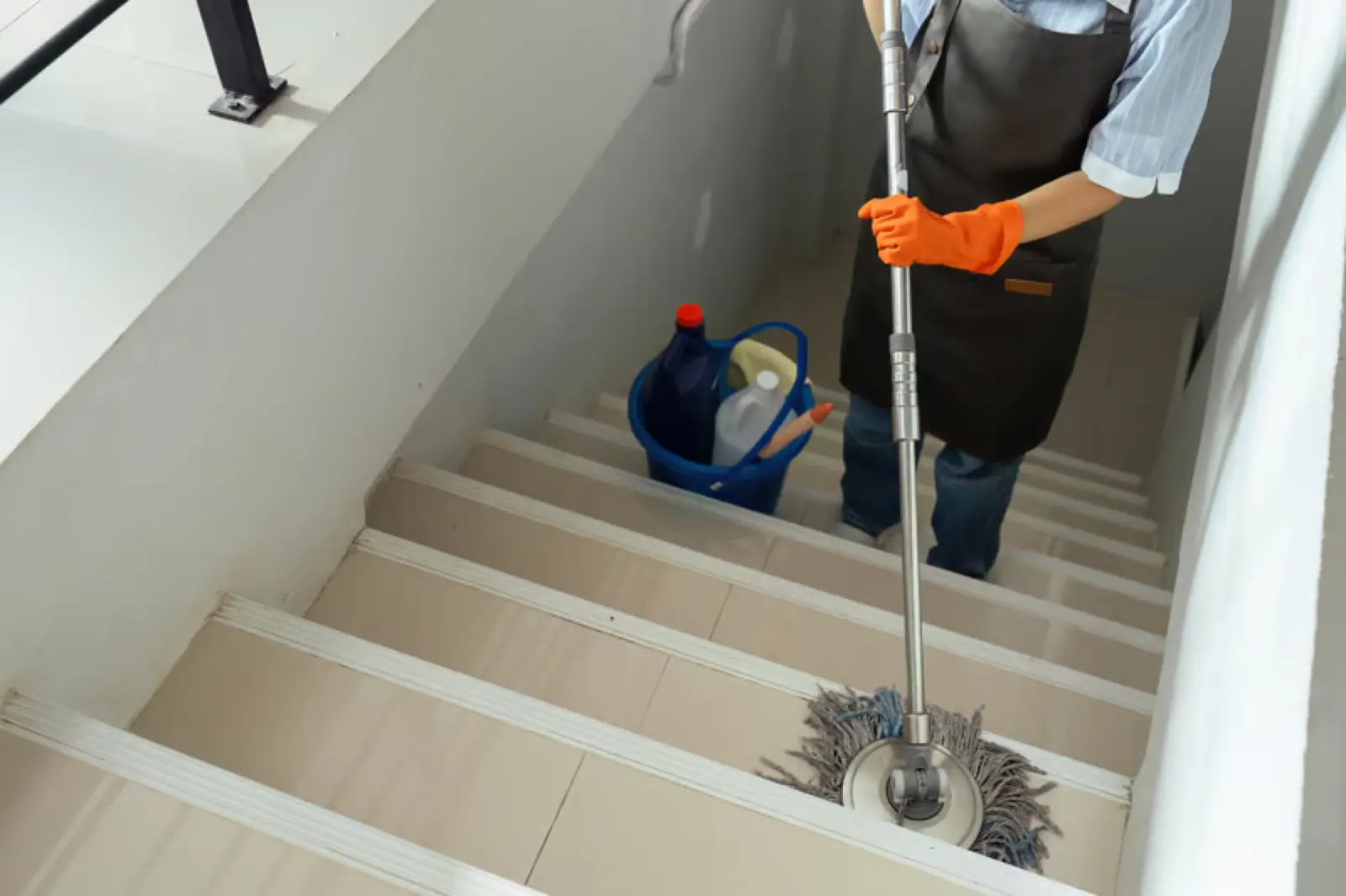
Rowhome staircases are usually steep, narrow, and enclosed by walls on one or both sides. They also take more foot traffic than any other surface in the home, because everyone passes through them many times a day. Grit collects in the back corner of each tread and along the nosing, and the walls beside the stairs pick up handprints and scuffs from people steadying themselves on the way up and down.
The best routine is to vacuum each tread with a crevice tool along the back edge, then damp-wipe rather than soak the wood. If your stairs are carpeted, a handheld vacuum or a stair attachment handles the risers and edges far better than a full-size machine balanced on a step. Wipe the handrail and the wall at hand height while you are there, since that stripe of wall is usually the dirtiest in the house. Safety comes first: never stand on a wet tread, and work from the top down so you are never stepping onto a freshly mopped step.
Trinities and other vertical layouts
Trinity homes, the small three-story houses with roughly one room per floor that you find in Society Hill, Queen Village, Bella Vista, and parts of Fitler Square, take the rowhome idea to the extreme. Spiral or winding staircases connect each level, and those turns are notoriously hard to clean because the treads are wedge-shaped and the inside corner is tight. A soft brush attachment and a microfiber cloth wrapped around your hand get into those curves better than any mop.
Because each floor is essentially a single room, trinities reward a room-by-room mindset. Finish one level completely, including dusting, surfaces, and floors, before moving to the next. Bathrooms in trinities are often tucked under stairs or squeezed into small footprints, so ventilation is limited and moisture lingers. Running the fan or cracking a window while you clean, and wiping down the shower right after use, keeps mold and mildew from getting a foothold in those tight spaces.
Small kitchens, big impact
Many Philadelphia rowhome kitchens are galley style or tucked into the back of the first floor. With limited counter space, clutter builds up fast, and grease from cooking settles on everything within a few feet of the stove, including the range hood, the cabinet fronts, and the top of the refrigerator. In a small kitchen, that film is noticeable quickly because every surface is close to the cooktop.
A good kitchen clean starts by clearing the counters so you can wipe them completely, then degreasing the cooktop, the backsplash, and the fronts of appliances. Wipe the cabinet handles and the area around the trash can, which collect more grime than they look like they do. Once a month, pull the toaster and other small appliances forward and clean behind them. In a compact kitchen, those few hidden inches are where crumbs and pests tend to start.
Basements, entryways, and city dust
Rowhome basements range from unfinished storage spaces with a washer and dryer to fully finished family rooms. Either way, they tend to run humid, especially during Philadelphia summers, which can bring musty smells and mildew on walls, stored items, and along the floor line. Keeping the basement swept, wiping surfaces, running a dehumidifier if you have one, and watching for mildew spots early are the simple habits that keep it usable.
The front entry is the other trouble spot. With the door opening close to the sidewalk, street dust, leaves, and in winter, road salt and slush come straight into the house. A sturdy mat outside, a second mat inside, and a quick sweep of the vestibule a few times a week make a real difference. Salt residue on hardwood and tile looks like a white haze and can dull finishes over time, so damp-mop entry floors regularly from December through March.
When to bring in help
Rowhomes are manageable to clean, but the stairs and vertical layout make it physically tiring, and that is usually why things slip. Many households find that a recurring standard cleaning every week or two keeps the stairs, kitchen, and bathrooms under control, while a one-time deep cleaning resets the baseboards, vents, cabinet fronts, and corners that build up over months. If you are moving in or out of a rowhome, a dedicated move-in or move-out cleaning covers the inside of cabinets and appliances that you cannot reach while the house is full.
Cris & Cleber Home Cleaning works in rowhomes across Greater Philadelphia, and a standard visit covers floors swept and mopped, carpets vacuumed, surfaces and fixtures dusted, bathrooms cleaned and disinfected, the kitchen including the cooktop and appliances, vents dusted, and cobwebs removed. If you want to know what it would take for your home, request a free estimate and we can talk through your layout.
Frequently asked questions
- How long does it take to clean a Philadelphia rowhome?
- It depends on the number of floors, bedrooms, bathrooms, and how recently the home was cleaned. A standard recurring cleaning of a typical two-story rowhome often takes a few hours, while a first-time deep cleaning usually takes longer. A free estimate gives you a realistic time frame for your specific home.
- What is the hardest part of cleaning a rowhome?
- For most people it is the stairs. Steep, narrow staircases collect grit in the back corners of every tread and the walls beside them pick up handprints, so they need careful vacuuming and wiping rather than a quick mop.
- How do I keep road salt off my rowhome floors in winter?
- Use a mat outside and inside the front door, take shoes off at the entry, and damp-mop entry floors often from December through March. Salt residue left on hardwood or tile can dull the finish over time.
- Do you clean trinity homes with spiral staircases?
- Yes. Trinities are cleaned floor by floor, and the winding stairs get hand attention with brushes and microfiber cloths so the tight inside corners are not skipped.
Related services
Serving
Ready for an exact price?
Get a free, no-pressure in-home estimate. Real numbers for your home, not a phone guess.