
Cleaning an Older Havertown Home: A Guide for Twins and Colonials
· By Cris & Cleber Santos
Walk down almost any block near Brookline Boulevard or in Oakmont and you will see the same thing: stone and brick twins, center-hall colonials, and Dutch colonials built between the 1920s and the 1950s. These houses are a big reason people choose Havertown. They have character, solid construction, and the kind of woodwork that newer homes rarely include.
They also clean differently than a new build. Original hardwood, plaster walls, radiators, enclosed porches, and older basements each need a slightly different approach. This guide walks through the parts of an older Havertown home that take the most care, what to use, what to avoid, and how to keep the house looking good without wearing out the finishes that make it special.
Why older homes need a gentler routine
Most cleaning products on the shelf are made for modern surfaces: sealed laminate, new tile, and painted drywall. Older homes have materials that react differently. Hardwood that has been refinished several times has a thinner protective layer. Plaster walls can stain from too much water. Old grout and unglazed tile soak up harsh cleaners. A routine that works in a 2015 townhome can slowly dull the finishes in a 1930s twin.
The goal is simple: use the mildest product that gets the job done, use less water than you think, and dry surfaces as you go. That approach protects wood, plaster, and grout, and it still leaves the house clean.
Original hardwood floors
Many Havertown homes still have their original oak floors, sometimes hidden under carpet for decades and refinished by a recent owner. The biggest enemy of old hardwood is grit. Sand and road salt tracked in from Darby Road or Eagle Road act like sandpaper every time someone walks across the floor.
Vacuum or dry dust mop first, every time, with a soft brush head rather than a beater bar. Then damp mop with a cleaner made for sealed wood floors, wringing the mop out until it is barely damp. Never pour water on the floor or use a steam mop on old hardwood, because the heat and moisture can push into the seams and cause cupping. Put felt pads on chair legs and mats at every exterior door, inside and out.
Plaster walls, trim, and built-ins
Plaster walls are durable, but they do not like being soaked. For fingerprints and scuffs, use a soft cloth with a little mild soap and water, then wipe dry. Test any cleaner in a corner first, especially on flat paint, which can burnish and leave shiny spots if you scrub too hard.
Trim, window sills, and built-in bookcases are where dust really collects in an older house. Wipe them with a barely damp microfiber cloth from top to bottom, so dust falls onto areas you have not cleaned yet. Deep window sills in stone homes collect a surprising amount of grime and dead bugs, especially in the spring, so give them a full wipe with every visit.
Radiators and heating vents
Cast iron radiators are common in Havertown twins and colonials, and they are dust magnets. Every fin traps lint and pet hair, and when the heat comes on in the fall, that dust gets baked and pushed into the room. Turn the radiator off and let it cool, then use a long, narrow radiator brush or a vacuum crevice tool to reach between the fins. Slide a damp towel underneath to catch what falls.
Homes that were updated with forced air heat have floor and wall vents instead. Remove the grilles a few times a year, vacuum inside the duct opening as far as you can reach, and wash the grilles in warm soapy water.
Stairs, landings, and banisters
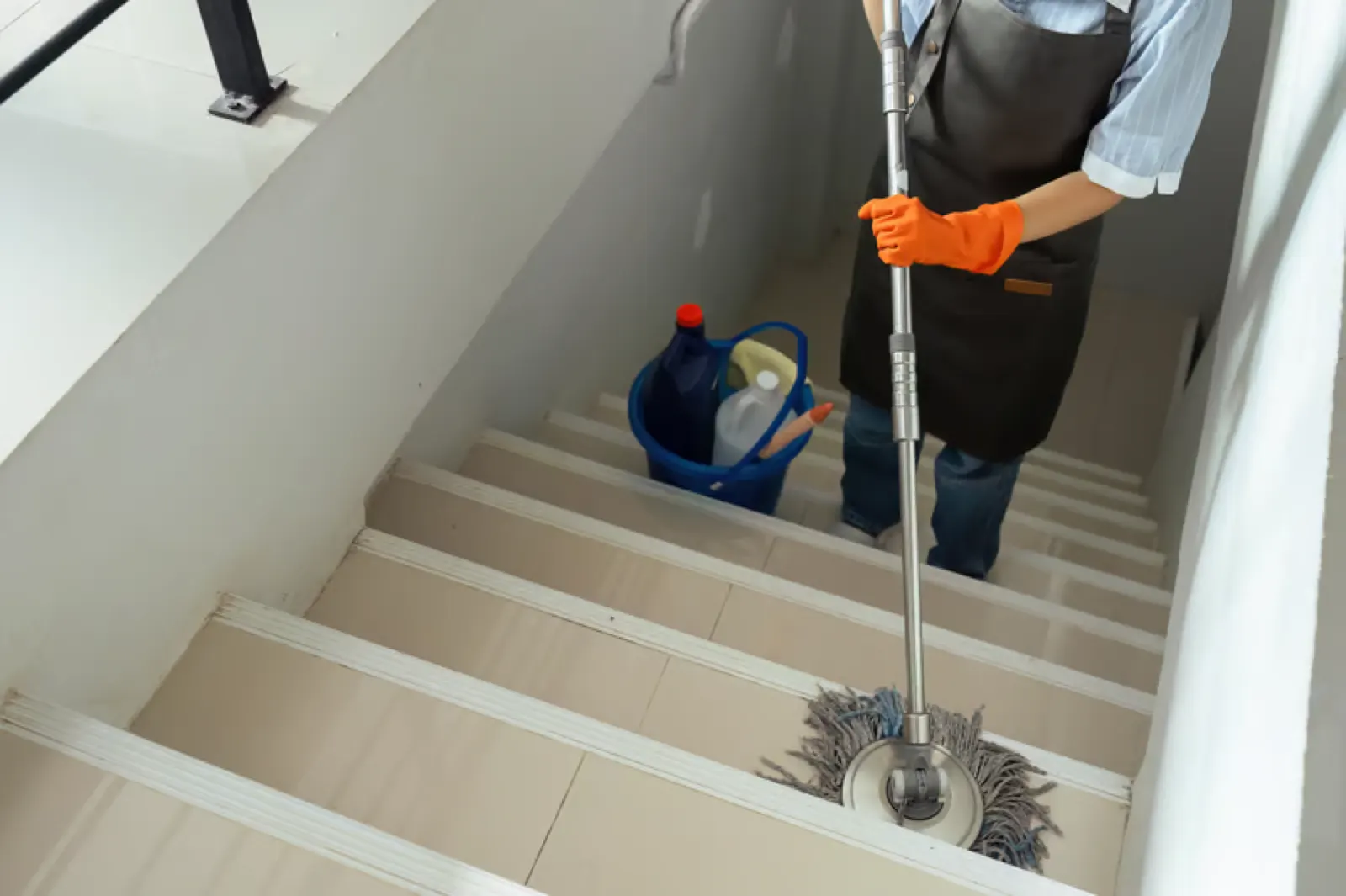
Twins and colonials put the bedrooms upstairs and sometimes add a finished third floor, so stairs get heavy use. Dust and hair collect in the back corner of each tread and along the edges where the stairs meet the wall. Use a vacuum with a crevice tool or a stiff hand brush for the corners, then wipe the treads and risers.
Wooden banisters and spindles pick up hand oils, so wipe them with a mild wood cleaner and buff dry. Stair runners can be vacuumed in place, and a careful spot clean handles most spills.
Enclosed porches and sunrooms
Many Havertown homes have an enclosed front porch or a sunroom added years ago. These rooms get a lot of sun and a lot of pollen, and the windows usually have more panes than the rest of the house. Clean them in the spring and again after the leaves drop. Vacuum window tracks before washing the glass, wipe down screens, and dust the ceiling fan if there is one.
Porch floors are often painted wood or tile, and they take the first hit of dirt from the street. A weekly sweep and a monthly damp mop keep them under control.
Basements and humidity
Older basements in Delaware County tend to run damp, especially in July and August. Musty smells and mildew on walls, shelves, and laundry areas are common. Keep a dehumidifier running in the summer, keep stored items off the floor, and wipe down laundry machines and utility sinks regularly.
For light mildew on hard surfaces, a cleaner made for mold and mildew works well, followed by drying the area. If you see mold on drywall or a large area, it is worth having a professional look at the moisture source.
A simple schedule for a Havertown home
Weekly: vacuum floors and stairs, clean kitchen counters and sinks, clean bathrooms, and empty trash. Every two weeks: dust trim, sills, and furniture, mop floors, and wipe appliance fronts. Monthly: radiators or vents, baseboards, inside the microwave, and porch windows. Seasonally: a deep cleaning that reaches inside cabinets, behind furniture, and into the corners that daily cleaning misses.
If that schedule does not fit around work, school, and Haverford Township sports, that is what a recurring cleaning service is for. Cris & Cleber Home Cleaning serves Havertown homes with recurring, deep, and move-in and move-out cleaning. The owners, Cris and Cleber, are on every job and follow a room-by-room checklist, with one extra helper on bigger first-time cleanings. Call or text (835) 280-7875 to ask for an estimate.
Frequently asked questions
- Can you use a steam mop on old hardwood floors?
- It is better not to. Steam pushes heat and moisture into the seams of older hardwood and can cause cupping or dull the finish. A dry dust mop followed by a barely damp mop with a wood floor cleaner is safer.
- How often should radiators be cleaned?
- Once before the heating season starts and every month or two while the heat is running. That keeps baked-on dust and that burnt smell to a minimum.
- Why does my Havertown basement smell musty in the summer?
- Older basements in the area often have higher humidity in the summer. A dehumidifier, good airflow, and regular cleaning of hard surfaces help a lot. A persistent smell can point to a moisture source worth checking.
- Do you clean twins and colonials in Havertown?
- Yes. Cris & Cleber Home Cleaning serves Havertown and Haverford Township with recurring house cleaning, deep cleaning, and move-in and move-out cleaning. Call or text (835) 280-7875 to ask about your street.
Related services
Serving
Ready for an exact price?
Get a free, no-pressure in-home estimate. Real numbers for your home, not a phone guess.